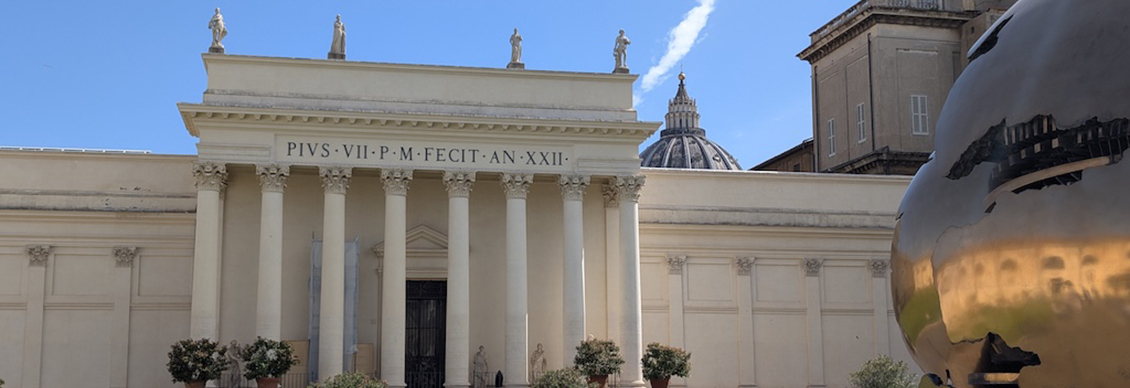
Having visited St. Peter's Basilica, we had lunch and then prepared for a tour here. I didn't really know what to expect, not having read much about it, but I assumed it would be interesting and, of course, finishing with the Sistine Chapel that I was particularly looking forward to.
I was going to be very surprised...
The Vatican Museums trace their origin to the early 16th century, when Pope Julius II, a passionate collector of ancient sculpture, put a Roman marble on public display in a courtyard of the Vatican Palace in 1506. That single statue, the Laocoön, had just been unearthed in Rome, and Julius's decision to share it with visitors is often cited as the founding moment of the museums. Over the following centuries, successive popes expanded this modest beginning into a vast complex, adding new galleries, wings, and collections as the papacy's role as patron and collector grew alongside the fortunes of the Catholic Church itself.
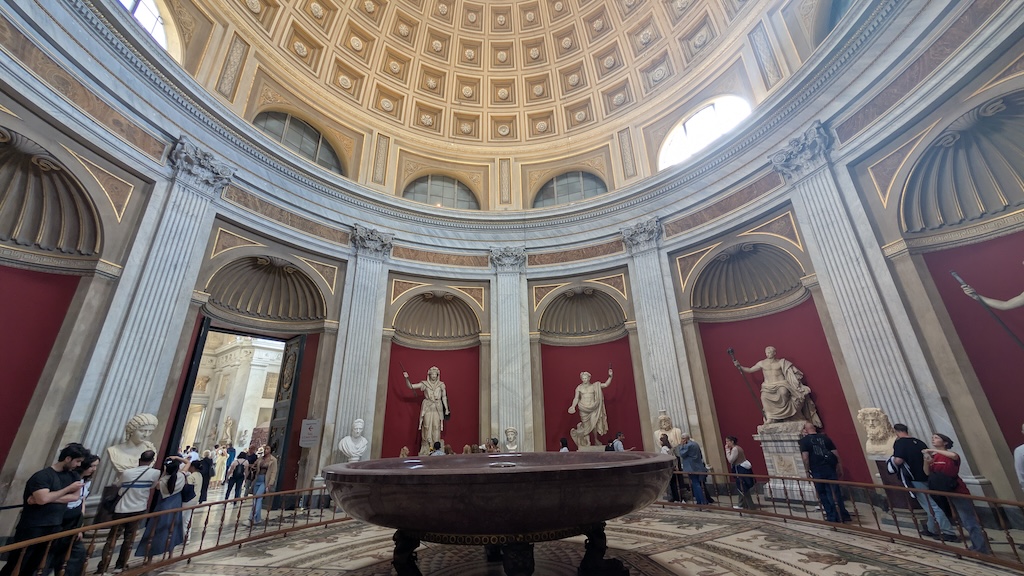
Immediately as you begin to walk through the complex of rooms, you realize that each contains its own stunning and invaluable collection of art and history. Beginning with treasures from the ancient civilizations, and expanding to more "modern" times, each corner we turned unveiled a stunning display that, like the decorations of St. Peter's, became almost mind-numbing in its vastness.
The 18th century brought a major turning point. Pope Clement XIV founded the Museo Pio-Clementino in 1771 to house classical antiquities in a more organized, scholarly fashion, and his successor Pius VI continued the project. This was the era when the museums began to resemble something like their modern form: dedicated spaces built specifically to display and study ancient art, rather than palace rooms pressed into service. The 19th century saw further growth under Pius VII and Gregory XVI, who added Egyptian, Etruscan, and secular history collections, reflecting the broadening intellectual interests of the age and Europe's fascination with archaeology.
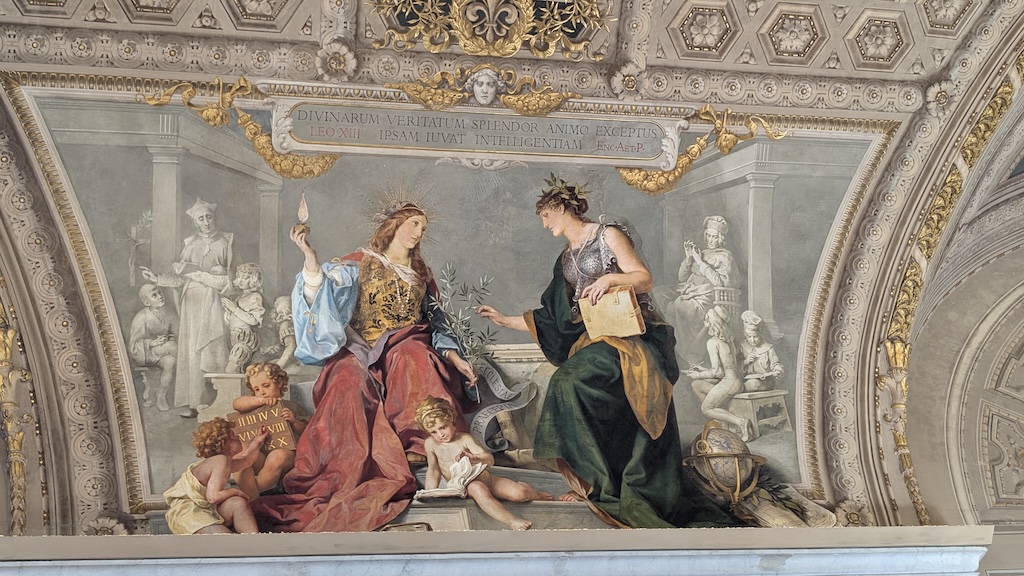
The 20th century, particularly under Popes Pius XI and John Paul II, saw the museums modernize significantly, with new wings for modern religious art and improved facilities to handle growing crowds of visitors. Today the Vatican Museums are one of the most visited museum complexes in the world, drawing millions of tourists and pilgrims annually. They occupy a sprawling network of galleries and courtyards within Vatican City, requiring visitors to walk several kilometers if they wish to see everything on offer, which is why many people plan their visit around specific highlights rather than attempting the whole route.
Like everywhere else we had toured so far in Rome, this place was incredibly packed with tours and tourists, each following the flag of their tour-leader like soldiers following the regimental flag of their assaulting unit.
As for what's inside, the collection is staggering in both scope and quality. The undisputed centerpiece is the Sistine Chapel, famous for Michelangelo's ceiling frescoes depicting scenes from the Book of Genesis, including the iconic image of God reaching out to touch Adam, as well as his later Last Judgment covering the altar wall. Beyond the chapel, the museums house the Raphael Rooms, a suite of papal apartments frescoed by Raphael and his workshop, featuring works like The School of Athens. The classical antiquities collections remain enormous as well, including the original Laocoön group that started it all, along with the Apollo Belvedere and countless other Greek and Roman statues, sarcophagi, and mosaics.
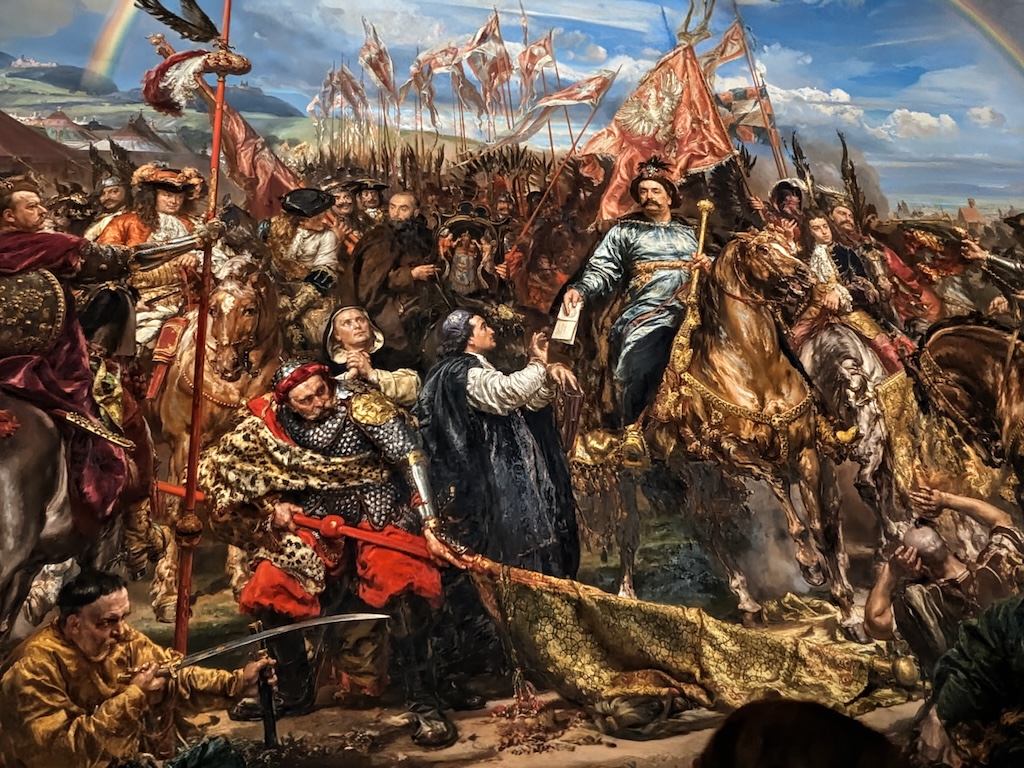
The Sistine Chapel was stunning but we weren't allowed to take photos or shoot any video inside. This was disappointing as it was almost the point of being on this physically challenging tour. I will probably be incredibly unpopular for comparing its walls to an ornate graphic novel by a particularly talented illustrator. Yet that was my first impression upon seeing the walls, and the countless images that adorned them.
Beyond these headline attractions, the museums encompass an extraordinary breadth of material: the Egyptian Museum with mummies and artifacts brought back by ancient Roman collectors and later expeditions, the Pinacoteca art gallery with paintings by masters like Caravaggio, Leonardo da Vinci, and Titian, the Gallery of Maps with its beautifully painted 16th-century topographical frescoes, and the Ethnological Museum, which holds objects gathered from missionary activity around the globe. Modern and contemporary religious art also finds a home here, in a collection established in the 1970s that includes works by artists such as Salvador Dalí, Vincent van Gogh, and Henri Matisse, showing that the museums' collecting mission never really stopped evolving even as its historical core remains centuries old.
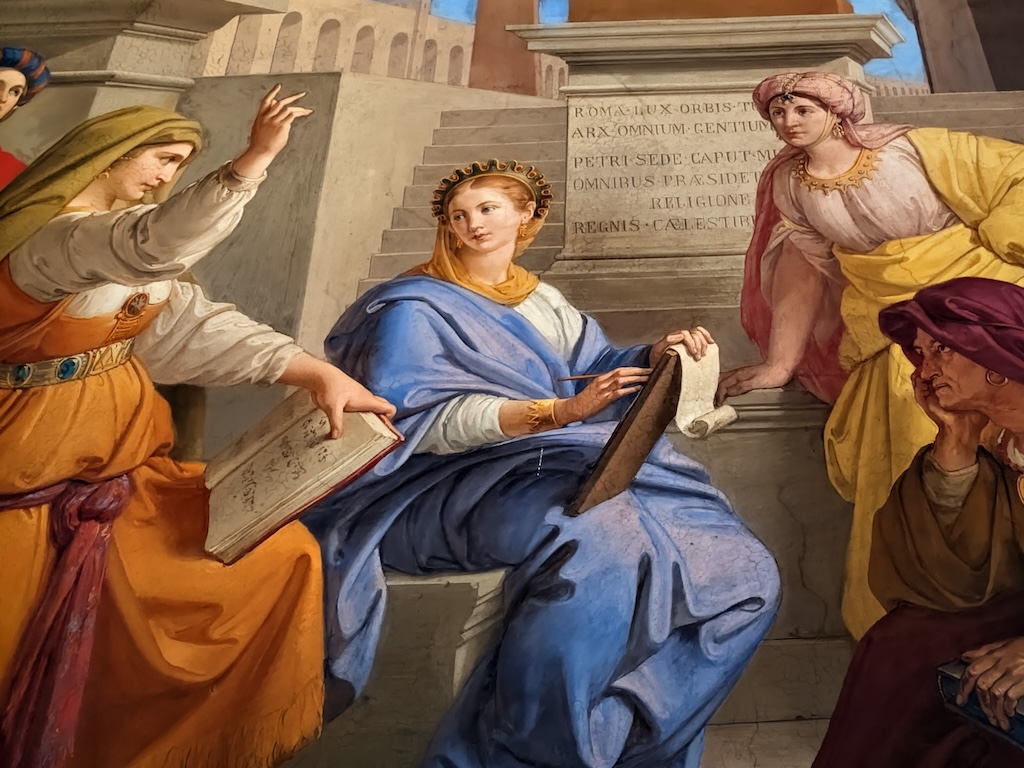
It was a wonderful place to visit and it staggers the mind when you try to consider the vast value of everything contained there. The primary drawback, so I felt, was that you were so surrounded by noise, you were so surrounded by people, and you were so rushed to moved forward, there was little time to actually appreciate anything you saw. You were so busy trying to stay with your group, avoiding getting trampled, avoiding trampling others, that it was all really just a blur.
That being said, if you're there you MUST see it.