Military

This category is for active or abandoned military sites.

Image

Arriving in Stephenville, Newfoundland, it's easy to find yourself driving along an old runway.  As you look around, you will see many buildings remaining from the former Harmon AFB, some of them dating back to its original construction in the 1940's.

Read More...

Image

I had, unfortunately, read about this a few months after being in Stephenville for the first time.  I marked it on my map for future reference with the idea that, someday, I would return.

Read More...

Image

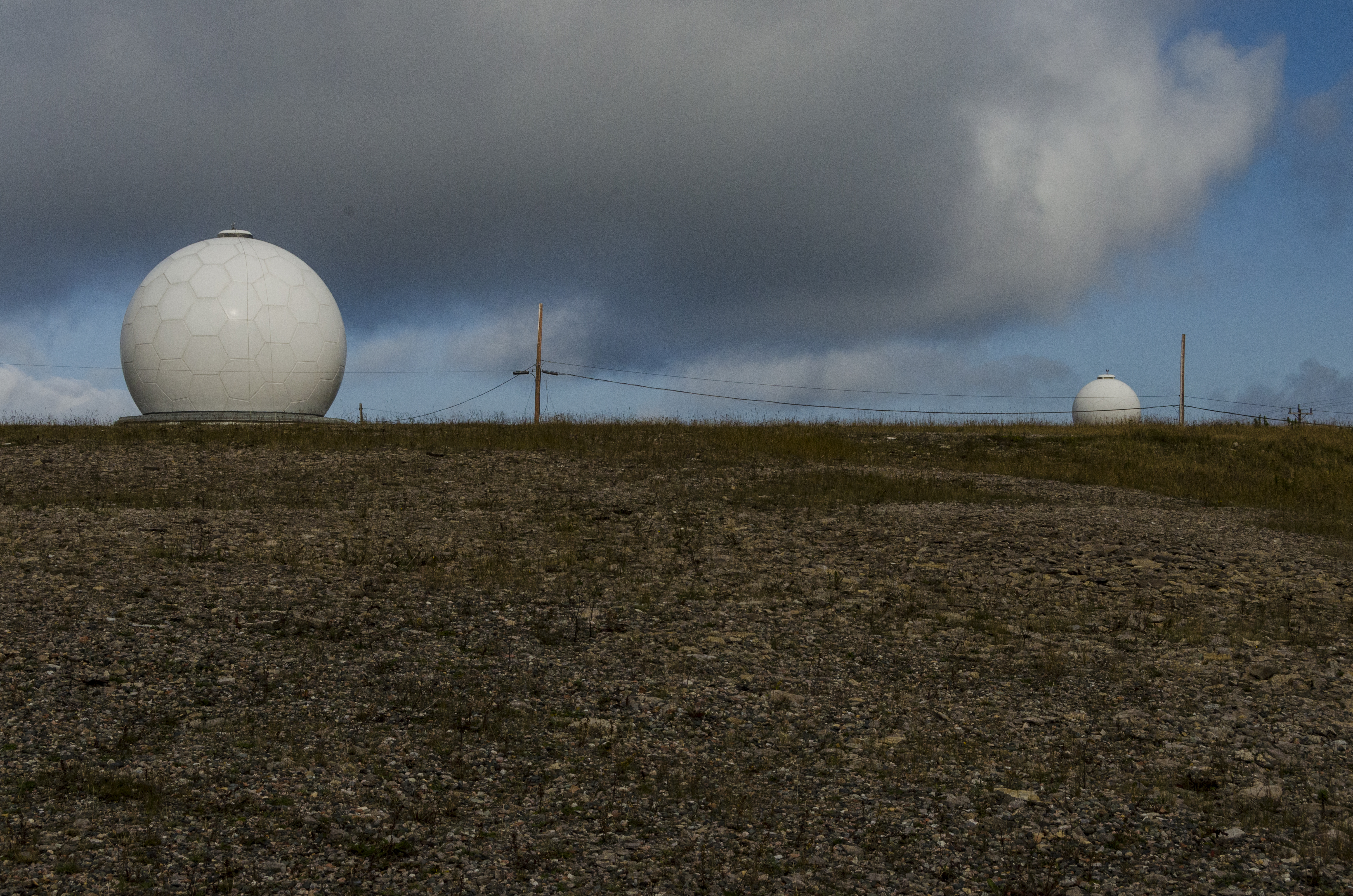
Completed in 1954 by the US Air Force, this radar station was part of the Pinetree Line, a group of radar sites across Canada used as part of the defense against the Soviet Union during the Cold War. It was manned by the 914th Aircraft Control and Warning Squadron.

Read More...

Image

Construction was completed on the USAF's Ramore Air Station in 1953. The station was first manned by the USAF's 912th Aircraft Control & Warning Squadron. The early warning 917th AC&W Squadron resided there until January 1962. During this time, the Americans became a big part of the surrounding area's community life.

Read More...

Image

The Lowen-Adler Kaserne, or Lion-Eagle Barracks began in 1892 as a military training ground under Emperor Wilhelm II. It was so named because it was technically two separate barracks, the Lion's Barracks for infantry training, and the Eagle's Barracks for artillery and later mechanized training.

Read More...

Image

We were fresh from wandering the Peenemunde Museum, minds filled with thoughts of buzz bombs and the first practical rockets.  One of our party had fallen victim to what I swear is weaponized poison ivy, but was feeling better by this point.  I had a second target in mind now.  One not quite as public.

Read More...

Image

Design of the V-1 began as an exercise to build a remote-controlled aircraft that could carry a payload of 1,000 kg for a distance of 500 km. After several design and staffing changes, the Fieseler Aircraft Company, in association with Argus Motoren, proposed the final design of the "flying bomb", or "buzz bomb" as it was sometimes known. On June 19, 1942, the concept was approved, production was given a high priority, and development began at Peenemunde West.

Read More...

Image

Constructed in 1939, Stubbert's Point Battery was part of the rather formidable defense network for the protection of Sydney, Nova Scotia. The battery was originally equipped with two 6-pounder Hotchkiss guns, but was later equipped with a 6-pounder duplex quick-firing gun. In addition, three search lights were constructed here to help guard the anti-submarine net that stretched across the harbour.

Read More...

Green Hosting Badge